

Why a static Astro site is the better website for a local shop — faster on a phone, cheaper to keep, no dashboard to break.
Someone searching “coffee near me” is standing on Holly Street, or walking Fairhaven in the rain, or sitting in a car off I-5 with one bar of signal. They will not wait for a page builder to finish. If your hours and phone number are not on screen yet, they will tap the next listing.
That is the job of a small-business website in Bellingham: show up fast, look like you, and let a person call or email. It does not need a login. It does not need a plugin marketplace. It does not need a database rebuilding the page every time a Western student, a weekend visitor, or a Canadian day-tripper opens it.
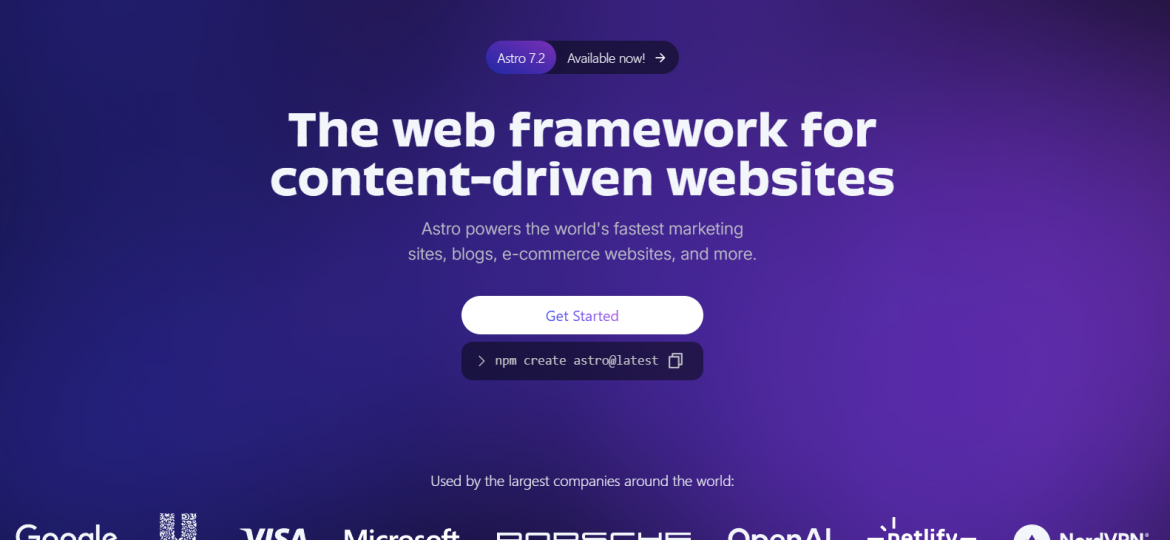
A static site built with Astro is how you get that. As of late August 2026, that means Astro 7. Here is why it is good for you — the owner who needs a 1–3 page site that actually works.
The problem with the usual website
Most local sites we take over look the same under the hood. A page builder. A theme. A contact-form plugin, an SEO plugin, a slider plugin, a security plugin to protect the other plugins.
That stack is right for a newsroom or a catalog someone updates every morning.
For a Fairhaven boutique, a downtown cafe, a contractor in Whatcom County — hours, about, contact, maybe a gallery — it is a lot of website. You pay for it in seconds on a phone before your number appears, and again in update nags and “the site feels slow” months later.
Static HTML is the quieter idea: the finished pages already exist and loads significantly faster than a large WordPress site. Astro is a fast HTML built-out site and WordPress is good but the opposite: rendered on demand, stack of plugins, hope the cache plugin holds on low data networks.
What you actually get
It loads. A static page is a small file. JavaScript only shows up if a piece of the page truly needs it — a photo carousel, not the whole lunch menu. On a weak connection, that is the difference between a customer walking in and looking up the next shop. Astro’s homepage, citing HTTP Archive and the Chrome UX Report, showed 66% of real-world Astro sites with good Core Web Vitals, against 48% for WordPress and 30% for Next.js (as displayed on astro.build in August 2026). Field data, not a promise about your URL. Their docs also claim 40% faster loads and 90% less JavaScript than the same site on “the most popular React web framework.” That is Astro’s claim. The part that matters in Bellingham is the mechanism: HTML first, extra code only where you ask.
Search can see you. Google is good at HTML. It is worse at waiting for an app to paint. Titles, headings, hours, and the words “Bellingham” and “Fairhaven” are in the first response. Combined with those Core Web Vitals numbers, that is the SEO argument that holds up — not another plugin.
You do not have to log in. There is no dashboard to wander through and break. Winter hours change by email, and the live site is updated HTML. If you want to publish three times a week yourself, say so; that is a different product. For most shops here, not having a CMS is a feature.
It stays cheap to keep on. Static files are inexpensive to host. SSL is table stakes. A contact form is a small extra that emails you. We bundle hosting, SSL, and that form with additional benefits at $55 a month because the bill is not a WordPress VPS. You are paying to keep the lights on, not for a database to generate three pages.
The first site is a project. The next one is a swap. A 1–3 page brochure — home, about or menu, contact — is a template plus your photos and copy. You are not buying a custom operating system. You are buying a fast public face for the business.
How it works (without the jargon)
Astro is a tool for content-driven sites: marketing pages, menus, portfolios, landing pages. You do not need to know that. You need to know the result.
Pages are written as HTML. At build time, Astro turns them into finished files in a folder. Those files are the website. Hosts publish the folder. Your visitor’s phone receives HTML. Your hours are in the HTML. Your phone number is a tap. Nobody runs a JavaScript application to find out if you are open on Tuesday.
If one piece needs to move — a gallery, a “open now” widget — that piece can be an island of interactivity. The rest of the page stays a document. Official wording from Astro: it “only ships the JavaScript you need and automatically strips away the rest.” Put another way: the site does not drag a whole app onto a phone on Holly Street so it can print a heading.
Is it faster to get a site up?
Faster to run, yes. Faster than a one-click WordPress install on the first afternoon, no.
WordPress’s first screenshot is quick. Then the theme fight, the form plugin, the cache plugin, the SEO plugin, the slider. The site you are still babysitting in year three is the real timeline.
An Astro brochure, once the template exists, is copy, photos, a domain, and a contact form that emails you. That is the product: a site you can launch as a 1–3 pager and keep without a plugin round. The learning sits on the builder’s side, not on yours. We make the initial setup fast and efficient so you don’t have to worry about it.
When it is not the right website
Skip this if the website is the product:
-
- You log in every day and write. WordPress’s editor still wins for a non-technical publisher. A headless CMS on top of Astro is two systems. Most shops do not need that.
- The catalog is the business. Carts, taxes, and accounts belong in Shopify. A static site can front a store. It is not a store.
- Every visitor sees a different homepage. That is an application, not a brochure.
A downtown shop, a Fairhaven studio, a Whatcom contractor with hours, a few photos, and a form is none of those. For that job, the usual WordPress stack loses on weight, upkeep, and what a phone has to download.
The site you actually need
You do not owe the internet a content management system. You owe a page that loads in the rain, tells the truth, and lets a person reach you. A static Astro site is that page: fast on a phone, visible to search, no login, a contact form that works, hosting that does not require a prayer.
If the current site needs a password to change a phone number and a plugin update to stay fast, you do not have a marketing problem. You have too much website. A 1–3 page Astro site is the smaller, better one.
